


Pull-Up Leather (Crazy Horse) Explained
What it is, why it ages beautifully, and how to care for it
If you’ve ever seen a leather bag that looks like it’s been on a thousand journeys—rich color, lived-in surface, subtle light–dark shifts when you bend it—that’s likely pull-up leather, often marketed as Crazy Horse leather. Unlike highly corrected, plastic-coated leathers that try to look perfect forever, pull-up is unapologetically alive. It’s stuffed with waxes and oils so the color “pulls up” and blooms lighter where the leather flexes or is lightly scratched, then deepens again with warmth and time. The result is a material that develops a signature patina unique to you.
This guide unpacks what pull-up leather really is, how it’s made, what to expect in daily use, typical applications (bags, boots, small goods), and the right way to care for it so it keeps looking its best—without killing the character you bought it for.
What is Pull-Up (a.k.a. “Crazy Horse”) Leather?
Pull-up describes a finish behavior, not a specific animal or grade. It’s most often full-grain or top-grain cowhide that’s been drum-dyed (aniline or semi-aniline) and then heavily conditioned at the tannery with a blend of waxes, oils, and sometimes greases. Those lubricants saturate the fiber structure. When you flex or compress the leather, those internal waxes shift microscopically, scattering light differently so the color appears lighter at the bend or scuff. Warm the spot with your hand, and the waxes flow back: the mark softens and blends.
“Crazy Horse” is a popular trade name for a rustic, wax-rich pull-up. There are variations:
- Oil pull-up: higher oil content; darker, slightly oilier hand; excellent for boots and rugged bags.
- Wax pull-up: slightly drier hand with that classic “scratch & blend” effect; great visual drama.
- Hybrid pull-up: balanced oil–wax cocktail; everyday carry sweet spot.
Key traits you’ll notice
- Color play: lightening on bends, darkening with heat and time.
- Fast patina: shiny high points, mellow lows; a lived-in look develops quickly.
- Surface honesty: small scratches and rubs are part of the charm—and largely reversible.
- Supple yet sturdy: the wax/oil load keeps fibers lubricated, so the leather flexes without feeling brittle.
- Minimal plastic feel: usually little to no polyurethane topcoat; you’re feeling real leather, not plastic film.
How It’s Made (in short)
- Selection & tanning: typically quality hides tanned chrome, veg, or combination.
- Dyeing: aniline or semi-aniline dye so the color penetrates (not just painted on).
- Fatliquoring & stuffing: drum-work infuses oils/waxes deep into the fiber network.
- Setting & finishing: light finishing to preserve that natural, responsive surface.
- Condition equilibrium: hides rest so oils/waxes stabilize before cutting.
This internal “stuffing” is why pull-up feels luxurious out of the gate and self-conditions in use.
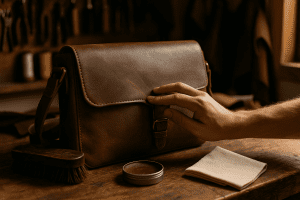
“Pull-up in action — a quick rub and buff blends scuffs while the patina deepens.”
Typical Uses
- Bags & luggage: messenger bags, travel duffels, backpacks—where character adds value.
- Footwear: heritage boots, chukkas, workwear styles that take a beating and look better for it.
- Small goods: wallets, folios, belts, notebook covers—everyday patina machines.
- Furniture & accents: rustic sofas, bar stools, straps—when a robust, forgiving leather is needed.
The Honest Pros & Cons
Why you’ll love it
- Character on day one: no awkward break-in shine; it looks “right” immediately.
- Patina speed: it tells your story fast—scuffs mellow, depth builds.
- Repair-friendly: many marks respond to warmth and a quick rebuff.
- Tactile satisfaction: warm, waxy hand; not plasticky.
Things to embrace/manage
- Scratch-positive: it will mark; that’s the look.
- Water darkening: raindrops can leave darker spots that usually blend with time/conditioning.
- Color variation: panels cut from different areas can vary; good makers match well.
- Finish sensitivity: heavy silicones or harsh cleaners can flatten the pull-up effect.
Daily Use & Care: Keep the Character, Lose the Grime
Quick routine (weekly or as needed)
- Dust & dry wipe: use a clean microfiber or horsehair brush to lift grit (grit = micro-scratches you don’t want).
- Hand-warm blending: for light scuffs, rub with clean, dry hands in small circles. Your warmth helps waxes migrate back and soften marks.
- Targeted buff: a soft cloth buff evens sheen.
Deeper clean (monthly/seasonal)
- Spot clean: lightly dampen a cloth with distilled water (or a few drops of a pH-balanced leather cleaner in water). Wipe; don’t soak. Air dry.
- Re-condition (thin is in): apply a pull-up-friendly conditioner/balm (wax-oil blend made for aniline leather). Use very thin coats, let dwell, then buff. This re-mobilizes waxes without overloading the surface.
Avoid: household cooking oils (olive/coconut—turn sticky, go rancid), straight silicone dressings (seal & suffocate), heavy petroleum jelly (attracts dirt), saddle soap as a daily habit (alkaline; occasional use only and follow with conditioner).
Water & weather
- Rain happens: blot, air-dry away from heat, then hand-warm and buff. Light tide marks usually mellow with time and a thin re-condition.
- Optional protection: for wet climates, a beeswax-rich balm or breathable water-repellent helps. Expect a slight darkening and a more matte look—test first. Pull-up already has oils/waxes; you’re topping up, not sealing it in plastic.
Scratches & rubs: a mini-playbook
- Fresh, light scratch: hand-warm + buff.
- Stubborn rub: add a whisper of conditioner, then buff.
- Dry scuff line: warm with a low hair-dryer pass from a distance (keep moving), massage; stop if any tackiness occurs.
- Grease spot: dust with cornstarch, leave overnight to draw oil, brush off; repeat if needed, then lightly condition.
- Dried mud: let dry fully, brush off; damp wipe residue; dry; buff.
Storage & Handling
- Bags: store stuffed (acid-free paper), upright, in a breathable dust bag—no plastic.
- Boots: use shoe trees; keep away from heaters; wipe salt/snow immediately.
- Belts/wallets: rotate use; don’t leave in hot cars (migrating waxes can print onto surfaces).
- Light vs dark: keep light pull-up away from raw denim or inky fabrics when new—early dye transfer is real.
Buying Guide: Spotting Good Pull-Up
- Depth, not paint: when you bend a sample, the color should bloom lighter, not crack or chip.
- Hand & smell: warm, waxy, clean leather aroma—no chemical plastic note.
- Grain integrity: you can see/feel natural grain; minimal plastic film on top.
- Cut consistency: well-made goods match panels so color shifts feel coherent.
- Maker honesty: they’ll acknowledge marks/patina as features, not defects.
FAQs
Will pull-up always scratch?
Yes—lightly, and that’s the point. Most everyday marks blend with warmth and buffing.
Can I waterproof it completely?
You can increase water resistance. 100% waterproofing usually adds films that mute pull-up character. Choose breathable protectants and accept a touch of darkening.
It looks dry—how often should I condition?
Light use in temperate climates: every 3–6 months. Heavy/wet use: 1–3 months. Always thin coats—over-conditioning can smother the look.
Can I use it for a dress briefcase?
Yes, but expect patina and character to show. If you want a forever-pristine boardroom shine, a more sealed, corrected grain might suit better.
What about edges?
Pull-up edges burnish beautifully. Makers may seal with wax/edge paint; you can refresh edges with a touch of wax and a canvas rub.
Care Recipes (Maker-Approved)
Fast refresh (bags/small goods):
Dry dust → hand-warm scuffs → micro-dab of balm → buff.
Boots after a wet day:
Blot & air-dry (trees in) → dust off → thin wax-rich balm → overnight rest → brush buff.
Oil spot triage:
Cornstarch overnight → brush → repeat if needed → feather-light conditioner → patience (it evens out).
Why Makers Choose Pull-Up (Design Notes)
- Cutting yield: marks are embraced; less waste than “perfect” hides.
- Aesthetic: premium looks without high-gloss plastic film.
- Longevity: lubricated fibers resist brittle cracking; customers self-maintain with hand warmth + buff.
- Sustainability angle: fewer heavy topcoats; age-gracefully philosophy encourages long use, not replacement.
Conclusion
Pull-up (Crazy Horse) leather is for people who like their goods to age with them. The wax/oil finish delivers a living color that records bends, knocks, and travels, then mellows into a deep, personalized patina. Care is simple and tactile—wipe, warm, buff, and, every so often, very light conditioning. Treat it right and your bag, boots, or wallet won’t just last—they’ll tell your story.