


Crunch Leather: Guide from A to Z
Crunch leather is a unique and intriguing type of leather prized for its rich texture and vintage character. This comprehensive guide will explore everything about crunch leather – from what it is and how it’s made to its characteristics, history, uses, and more. Whether you’ve encountered the term in a handbag description or a shoe catalog, we’ll demystify crunch leather in clear terms. By the end, you’ll understand how it differs from other leathers, how to identify genuine crunch leather, and why it’s both loved for its beauty and valued for its durability.
What Is Crunch Leather?
Crunch leather refers to a genuine leather that has been finished to have a slightly crinkled or wrinkled appearance with a glossy sheen. It is typically made from buffalo,cow or calf hide (often top-grain or full-grain) and gets its name from the textured “crunchy” look of the grain rather than any actual stiffness or crunchiness to the touch. In fact, crunch leather is usually soft, supple, and flexible – much more so than it sounds. The term “crunch” really describes the finish: a special treatment that creates natural wrinkles/creases in the leather and often a two-toned depth of color.
Composition and Quality: High-quality crunch leather is often made from top-grain calfskin or cowhide that preserves the natural surface of the hide.This means you may see subtle natural marks or grain, since the finish is transparent enough to let the leather’s character show through. Unlike heavily “corrected” leathers, crunch leather isn’t thickly painted over; instead, it’s usually stained with dyes that allow the grain to be visible. For example, one brand’s signature crunch leather was described as Italian calfskin hand-stained with two layers of natural transparent dyes (a neutral base color and a vivid top color).This top color is what you see on the surface, while the base color hides underneath – a key to crunch leather’s distinctive look over time.
How It Differs from Other Leathers: Crunch leather stands apart from smoother leathers like nappa leather or patent leather. Whereas nappa is known for being ultra-smooth and soft, crunch leather is soft yet visibly textured with crinkles. Crunch finishes also tend to be glossy (though not as mirror-bright as patent leather), giving a shiny, almost “wet” look that accentuates the wrinkles. In contrast, pull-up leathers (such as crazy horse leather) develop lightened areas when bent due to waxes, but they might not have the pre-creased, crackled look that crunch leather has. Crunch leather often has an “antiqued” two-tone effect built in: as it bends or wears, you can see a lighter or contrasting undertone peeking through the top color. This gives it a rich, vintage character out-of-the-box, unlike plain smooth leather which might take years of wear to achieve a similar patina.
To summarize, crunch leather = genuine cow/calf leather + special finishing for a crinkled, glossy, two-toned appearance. It’s a marriage of luxurious material and rustic aesthetic. Next, we’ll dive into how tanners create this effect.
How Is Crunch Leather Made?
Crafting crunch leather involves particular techniques in the tanning and finishing process to achieve its signature look. Below is an overview of the full process from hide to finished crunch leather:
Tanning: Crunch leather can start from hides tanned using traditional methods. Many are chrome-tanned for softness and flexibility, though some are vegetable-tanned or combination-tanned depending on the desired effect.For instance, a supplier of Western crunch leather notes their hides are semi-vegetable tanned water buffalo, combining veg tannins with other agents for durability. The tanning process prepares the leather, but the “crunch” character really comes from what happens after tanning – in dyeing and finishing.
Dyeing (Two-Tone Coloring): One hallmark of crunch leather is layered coloring. Tanners typically apply transparent aniline dyes in multiple layers. Often, the first dye is a light or neutral tone that penetrates the hide, and the second dye is a darker or more vibrant hue on top. Because the dyes are transparent (not opaque paint), the natural grain and any wrinkles are not obscured. This two-tone approach means that as the leather flexes or wears, the top color may lighten or rub slightly, allowing glimpses of the base color. For example, Italian crunch calfskins might have a base of tan and a topcoat of rich red; with time, the red’s intensity softens and the golden tan base “shows through,” creating a cool vintage look. The dyes are often applied by hand or in drums, and the hide may be left unpigmented in areas to enhance variation.
Finishing & “Crunching” Process: Here’s where crunch leather gets its texture. After dyeing, the leather is treated with oils and waxes and then mechanically crunched – literally crumpled, folded, or pressed to create wrinkles in the grain. In the industry, this is sometimes called boarding or crunching. One method used by tanneries is to apply heat and pressure to a folded hide, which breaks down some fiber stiffness and imprints a natural wrinkle pattern. In fact, the term “crunch” comes from a process of crumpling the leather (often by hand or in a machine) to give it that lived-in texture. Another advanced technique involves rolling the leather into a tight tube or ball (“crunched” up) and then injecting dye or oils while it’s in this state. When the hide is unrolled and dried, this yields a dramatic marbled, tie-dye-like pattern of lighter and darker areas as a result of uneven dye penetration. Not all crunch leather has such a wild pattern, but this shows how creative the process can get.
Drying and Conditioning: After the leather has been “crunched” and treated, it is usually dried carefully. Tanners might use vacuum drying or hang drying to set the wrinkles in place. The leather may also be milled (tumbled in a drum) to soften it further and enhance the natural grain texture – this helps give crunch leather its soft temper despite the visual crackle. The milling plus oils result in a leather that feels broken-in from day one.
Surface Finish: Finally, the surface is often given a light glossy finish. This isn’t a thick plastic coating (since that would fill in the wrinkles), but instead could be a wax polish or protein glaze that is buffed to a shine. In some cases, craftsmen use a polishing wheel to gently burnish the peaks of the wrinkles, adding luster to the high points. The result is a subtle gleam over the crinkled texture – hence the characteristic glossy, crunched look. Unlike patent leather (which has a glass-smooth lacquer), crunch leather’s shine is more natural and variable, often described as glazed or waxed rather than mirror-like.
The outcome of all these steps is a leather that looks like it has stories to tell. Each hide will have a slightly different wrinkle pattern, and the two-tone dye means no two pieces of crunch leather are identical. It’s a labor-intensive finish, done by skilled tanners who know how to balance the right amount of wrinkle and gloss. Notably, some chemical suppliers even formulate special resins and waxes for crunch effects, underscoring that it’s an established finish in the leather industry (for example, “crunch effect” is listed alongside other finishes for shoe uppers).
Physical and Aesthetic Characteristics
Look and Texture: At first glance, crunch leather is recognized by its distressed, cracked appearance and sheen. The grain surface has an intentional network of wrinkles or creases, as if the leather has been gently “crushed” or aged, yet it still feels smooth to touch (the wrinkles are usually not deep enough to feel rough). This texture catches light and creates a two-tone contrast: the peaks of the wrinkles often appear lighter or shinier, while the valleys are darker. Often a base color will peek through at the creases, giving a subtle antiqued or marbled effect. For example, a deep red crunch leather bag might show hints of a tan or cream base in the folds, enhancing its character. The finish is glossy but not uniform – expect a kind of rich, glossy patina rather than high-gloss polish. One description calls it a rich, glossy finish with distinctive texture achieved through special waxing and hot-stuffing, which indeed sums it up (waxes contribute to the shine and suppleness).
Close-up of a crunch leather hide. Note the glossy finish on the crinkled grain surface, and how the natural wrinkles create areas of lighter and darker tone. The leather remains supple and flexible despite its “aged” appearance.
Hand and Flexibility: Despite the name “crunch,” this leather is typically very soft and pliable. The crunching process actually breaks in the leather fibers, often making it more flexible than a flat piece of leather. Many people are surprised that something which looks “wrinkly” can feel so buttery and broken-in. In fact, a high-quality crunch leather piece often drapes or “slouches” nicely. For instance, users of crunch leather handbags note that they become mushy and soft with use, forming comfortably to the body. The leather is also usually of moderate thickness – enough to be strong, but often lighter-weight than stiff vegetable-tan leathers. One brand known for crunch leather intentionally made their hides thin and lightweight yet strong, so that the resulting bag was not heavy to carry but still durable. So expect a lightweight durability: a lot of strength and character without bulk.
Color and Two-Tone Aging: As mentioned, crunch leathers often have a base and top color. When new, you mostly see the top color (with subtle variations), and the finish might be quite shiny. Over time, two main changes happen: softening and patina development. The leather tends to get even softer (“smooshier”) with handling, and the shine may mellow as the waxes settle or rub off slightly. Also, areas that flex or rub frequently will lighten or show the base color more. Rather than looking ruined, this actually enhances the vintage look – the item develops a one-of-a-kind patina. For example, a crunch leather wallet might get creases where it folds that are a bit lighter than the rest, giving a rugged charm. A description from a leather atelier highlights that with use, folds and creases reveal hints of the underlying color, adding character with each scuff. Scuffs or scratches on crunch leather tend to blend in as part of the distressing, and often can be buffed or conditioned to reduce contrast. In short, crunch leather ages gracefully: it’s designed to look even cooler over time, developing a “well-worn” vintage appeal rather than looking old and tired.
Natural Marks: Because crunch leather uses transparent dyes and light finishes, you might notice natural hallmarks of genuine leather like small scars, pores, or grain variations. This is normal and even desirable – it shows you’re looking at real full-grain leather, not a completely sanded and painted surface. The crunch effect can sometimes accentuate grain patterns (similar to how crushed leather generally means the grain is enhanced by a process). So, a piece of crunch leather might have an almost topographical look, with the wrinkles and any natural grain forming a unique texture map. This individuality is part of the aesthetic; as one source put it, the leather has a lot of personality and no two pieces are exactly alike.
Summary of Characteristics: In summary, crunch leather is visually striking – shiny, crinkled, and rich in color. It feels comfortable and broken-in, not crunchy or stiff. It carries a sense of history, even when new, and it will deepen in character as it ages. These traits make it a favorite for those who appreciate a blend of luxury and rustic charm in their leather goods.
Historical Background and Development
The techniques behind crunch leather have roots in traditional leatherworking, but the finish really gained recognition in the late 20th century as a stylish way to achieve a vintage look on new leather. Historically, tanners have used methods like boarding (folding and rolling leather by hand or machine) to create attractive grain patterns – for example, “crushed” or “Morocco” leathers for bookbindings were made by folding and wrinkling goat skins to enhance the grain. The modern crunch leather likely evolved from these heritage practices, combined with newer chemical treatments (like aniline dyes and hot-stuffing with oils).
It’s difficult to pinpoint one inventor or date for crunch leather, as different tanneries seem to have developed their own versions over time. Italian tanneries are famous for creative finishes, and it’s no surprise that an Italian calfskin was behind the popularity of crunch leather in fashion accessories. By the 2000s, certain brands (for example, handbag makers like Tano in the U.S.) made “crunch leather” their signature material, showcasing it in a rainbow of colors each season. This indicates the process was well-established by the early 21st century. In fact, a leather expert noted in 2008 that crunch leather was “not a cheap leather by any means” – it was top-grade calfskin and unique in the industry at that time. Its popularity in handbags may have spurred more manufacturers to adopt the style.
On the manufacturing side, specialty tanneries in the U.S., India, and elsewhere produce crunch leather today. For example, Seidel Tanning (USA) has been producing a variant of crunch leather for decades. They even describe a dramatic method (crunching into a tube and injecting dye) that they’ve been doing “for decades” to achieve a high-character leather. Meanwhile, leather suppliers in India list “crunch leather” and “crunch bag leather” among their main product lines, indicating a broad global demand. By the 2010s and 2020s, crunch finish leathers were showing up in everything from high fashion shoes (e.g., Bottega Veneta labeled some of their footwear as made of “crunch leather”) to mainstream accessories. The term “crunch” has thus entered the lexicon to describe this particular look.
Regional Variations: Different regions sometimes have their own names or tweaks for crunch leather. In Italy, you might hear “cuoio crunch” informally, but often the English word “crunch” is used internationally in trade. Some tanneries use terms like “oil crunch” or “wax crunch” to specify that the leather was heavily oiled for a pull-up effect in addition to being crunched. For instance, a description of brick-colored two-tone oil crunch leather explains that it has a colored overlay with a light base, and the oil content allows the color to shift and vintage effect to develop – essentially a pull-up + crunch hybrid. In general, pull-up leathers (like crazy horse) are close cousins of crunch leather, and sometimes the finishes overlap.
Another related term is “glazed leather” or “crackle leather”, which can describe leathers with a cracked, glossy surface. Some manufacturers might use “crackle finish” to describe a similar two-tone cracked glaze on leather. For example, a “glazed crunch buffalo” belt implies a crunch-style wrinkled texture with a shiny topcoat.The traditional term “crushed leather” (as defined by Merriam-Webster) simply means leather with grain enhanced by boarding or plating – which is essentially what crunch leather is, with the addition of dye effects. So, while “crunch” is the popular name now, the idea of artificially wrinkling leather grain for aesthetic has been around much longer.
In summary, crunch leather developed as tanners experimented with creating pre-aged, textured looks, combining old-school hand-crunching with modern dyes and waxes. From artisan workshops in Tuscany to large tanneries in Kanpur, the technique spread and was tailored to different hides and tastes. Today, it’s a well-loved finish that carries a bit of heritage (in method) and a lot of style.
Primary Uses and Industries
Crunch leather’s distinctive look and durability make it suitable for a variety of uses, primarily in fashion and accessories. Here are the major industries and products where crunch leather shines:
Handbags and Small Leather Goods: Perhaps the most visible use of crunch leather is in ladies’ handbags, tote bags, and purses. The leather’s lightweight strength and ability to take color beautifully (those vibrant dyes) made it a hit for handbags starting in the 2000s. Many boutique brands offered bags in crunch leather, touting how light yet durable they were. The textured gloss also adds visual interest to simple bag designs. Besides handbags, you’ll find wallets, belts, wristlet straps, and even watch bands made of crunch leather. These items benefit from the leather’s flexibility (a crunch leather wallet will fold nicely without cracking) and its patina (a belt will develop a cool distressed look over time). Men’s accessories like belts and briefcase-style bags also use crunch-finished leather for a rustic, masculine appeal. For instance, some belt makers advertise “full grain buffalo leather in crunch finish” to give a dress belt a bit of vintage character.
Footwear: Crunch leather is used in certain boots and shoes, especially where a distressed or heritage style is desired. It’s not as common as smooth leather for dress shoes, but you will see it in fashion sneakers, women’s boots, and designer heels at times. A notable example: luxury brands have produced heels and pumps in crunch leather to pair a refined shape with an intentionally creased texture (giving a very modern-artsy vibe). On the practical side, some rugged boot makers might use crunch leather for the vamp or shaft to create an instantly “broken-in” look. A Q&A definition even noted cow crunch leather is used in the manufacture of shoes and purses – highlighting its role in footwear. Western-style boots sometimes feature crunch leather in the shaft or decorative underlays, leveraging its shiny, crinkled finish for contrast. Moreover, because crunch leather can be quite durable, it’s suitable for shoe uppers that undergo bending; the wrinkles are already there by design, so the leather doesn’t look bad when flexed – it just adds more character.
Apparel: Full garments in crunch leather are less common, but occasionally you’ll see a leather jacket or coat with a crunch finish. These tend to be statement pieces – imagine a trench coat with a subtle crinkle effect giving it a weathered gloss. The challenge is that crunch leather often comes in smaller hides (like calf) and thinner weights, so it’s more often used in panels or trims rather than heavy jackets. But fashion designers do use it for accents: collars, pocket flaps, or patchwork that needs a pop of texture. It’s also popular for gloves and hats in vintage styles, where a bit of glossy patina goes a long way.
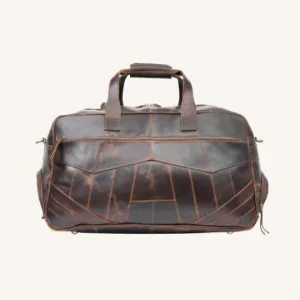
Upholstery and Home Decor: While not as widespread as in fashion, crunch leather does find its way into upholstery leather and décor for a rustic look. Bar stools, vintage-style armchairs, or motorcycle seats might be upholstered in crunch leather to emulate a retro aesthetic. Because crunch leather is smooth but has that worn look, it can give furniture a “lived-in luxury” vibe right away. However, heavy-use upholstery (like a family sofa) is usually made with thicker, protected leather; crunch-finished upholstery is more common on accent pieces or décor that value style over high traffic wear. Some leather suppliers categorize “crunch upholstery leather” separately, likely indicating a slightly thicker or more treated version for that purpose. Additionally, luggage and travel goods occasionally use crunch leather for the outer material, to evoke a classic well-traveled appearance (imagine a duffel bag or suit cover that looks like an heirloom but is new).

Volere Leathers Travel Duffel Bag made from Crunch Leather
Craft and Leatherworking: In the leathercraft community, crunch leather hides or panels are sold for making custom goods. Hobbyists might choose a crunch leather side to craft journal covers, knife sheaths, or even guitar straps, because it already has a distinctive look without needing much tooling. It’s a way to achieve an antique aesthetic immediately, which is very appealing for one-of-a-kind handcrafted items.
Across these applications, a common theme is aesthetic appeal combined with functional durability. Crunch leather goods tend to appeal to those who want something that stands out from plain, smooth leather. For example, a simple tote bag in crunch leather will catch eyes due to its sheen and texture, and it will also withstand daily use with minimal care (scratches blend in, the color doesn’t immediately show wear thanks to the base layer, etc.). In contrast, a high-gloss patent leather bag might show scuffs sharply and a suede bag might stain easily – crunch leather hits a sweet spot of looking refined but also forgiving.
Another industry worth noting is the leather supply trade itself: many tanneries and leather suppliers produce and market crunch leather in various colors to manufacturers. It’s not a fringe material; you can find sides of “crunch cowhide” or “buffalo crunch” readily in catalogs. This indicates that plenty of downstream makers (from shoe factories to small leather goods shops) incorporate it into their product lines.
In summary, crunch leather is used wherever a touch of vintage elegance is desired – from the strap of a luxury watch to the seat of a retro barstool. Its versatility in fashion and design stems from its unique look and reliable performance.
Regional Naming and Variations
As mentioned, the term “crunch leather” is fairly universal in the leather trade, but there are a few regional nuances and related terms:
“Crunch” vs. “Crushed”: English-speaking tanneries might use crunch finish and crushed leather somewhat interchangeably, but there is a subtle difference. Crushed leather (per dictionary definition) usually means any leather whose grain was enhanced by a mechanical process like boarding or plating. This could include pebble-grain effects or others not as glossy as crunch. Crunch leather, on the other hand, implies a more specific combo of wrinkles + gloss + two-tone dye as we’ve described. So, all crunch leather is technically “crushed” in the sense of grain, but not all crushed leather has the crunch look. In practice, though, many people won’t distinguish these terms too finely.
Local Language Terms: In Italian, one might say “effetto crunch” for crunch effect, or simply use “cuoio crunch” (crunch leather) since the English word has been adopted. Similarly, Indian leather exporters listing crunch are catering to international buyers and use that English term. In Spanish, a direct translation “cuero crujiente” (literally “crispy leather”) is sometimes seen in product descriptions, but more often marketers just keep “crunch” as part of the name, as in “bolso de cuero crunch” for a crunch leather bag. It’s a niche term outside the industry, so it hasn’t developed a wide array of local names.
Aliases in Marketing: You might encounter creative names for crunch leather in consumer products. For example, one brand might call it “Vintage leather”, “Distressed gloss leather”, or “Wrinkled leather” when describing a jacket or bag, avoiding the word crunch if they fear customers might take “crunchy” literally. “Antique finish leather” is another phrase that can imply a similar two-tone cracked look. However, within spec sheets or material lists, “crunch leather” is often used because it succinctly identifies that specific finish. Some retailers also tag products as “crunch look” if they imitate the appearance (more on imitations soon).
Oil Crunch and Other Variants: As discussed, some tanners offer oil crunch leathers, which have a higher oil content (like oil-tanned pull-up leather) combined with the crunch effect. These often go by names like “oil pull-up crunch” or even brand-specific names. For instance, “crazy horse crunch” might be used by a supplier to describe a leather that has both the waxy pull-up nature of crazy horse leather and a crunch texture on the surface. In essence, these are hybrids but still fall under the broad crunch family due to the crinkled finish. Another variant is “printed crunch” – some leathers are embossed with a pattern and then crunched and milled. A case is “printed dry milled crunch leather,” where the hide has a printed grain pattern plus the crunch effect, yielding a uniform color but with a distressed, slightly glossy surface.
Glazed Crunch vs. Matte Crunch: Not an official category, but you may notice some crunch leathers are shinier than others. A glazed crunch finish (sometimes just called glazed buffalo, etc.) has a higher sheen due to a coating or polish. A matte crunch might skip the final gloss, leaving a more muted, powdery appearance while still having the wrinkles. Manufacturers might not label these differently, but if you are sourcing leather, it’s something to be aware of.
Overall, while the core concept of crunch leather remains the same, these variations highlight the finish’s adaptability. Tanners can tweak it to emphasize different traits (more oil, extra shine, printed patterns) and brands might label it creatively. However, the fundamental idea – accentuated grain through “crunching” – is the common thread worldwide.
Quality and Value Perception
How is crunch leather perceived in terms of quality and value? The answer can depend on who you ask, but let’s break down the general consensus:
Material Quality: When made as described (with full-grain or top-grain hides, aniline dyes, etc.), crunch leather is high quality leather. It retains the strength of the original hide, unlike split or bonded leathers. Leather aficionados often regard it as a premium finish because it’s usually applied to good hides and requires craftsmanship. For example, Tano’s crunch leather bags were lauded for using top-grain Italian calfskin and natural dyes, and it was emphasized that this is not a cheap leather by any means. The leather’s durability backs this up – crunch leather items tend to last for years, and any wear only adds to their look rather than ruining them. The inherent oils and waxes also help resist drying and cracking, so long-term it holds up well.
Aesthetic Value: There is a bit of a split in taste when it comes to aesthetics. Fans of crunch leather absolutely love the rich colors and the fact that it doesn’t look boring or “plain”. They appreciate the almost handcrafted vibe it gives, and that each piece ages uniquely. The vintage, lived-in charm is the selling point. On the other hand, some people prefer a very pristine, uniform leather look and might perceive the high-gloss wrinkles as looking “cheap” or plastic-like at first glance. For instance, a forum member once compared a glossy crunch leather to another brand’s shiny leather and found it not to her taste, calling it a bit cheap-looking (purely a subjective fashion opinion). This highlights that crunch leather’s shiny, crinkled style is not for everyone – some prefer smooth matte leathers for a sense of luxury. However, many who actually handle good crunch leather change their mind, noting that it feels and smells like real leather, not plasticky, and that the depth of color is quite luxurious.
Brand Positioning and Price: Products made of crunch leather span a range of price points. You can find mid-range bags, like those around $200-$300, using crunch leather (these often marketed on their unique leather as a selling point). You can also find luxury designer items ($1000+ handbags or shoes) using crunch leather as an exotic finish. Generally, when genuine crunch leather is used, the price will reflect the fact that it’s not a basic material. It might be a bit more expensive than an equivalent smooth leather item, because of the extra processing. Consumers often perceive crunch leather goods as artisanal or heritage pieces, adding to perceived value. In contrast, if you see something very cheap labeled “crunch leather,” be cautious – it could be a misleading term (as we’ll discuss under imitations).
Misuse of the Term: Speaking of caution, the term “crunch leather” has at times been used loosely in marketing, which can affect perceptions of quality. Some mass-market products advertised as “crunch leather” turned out not to be full genuine leather at all, but bonded leather or faux leather. For example, a department store tote bag branded as a Crunch Leather Tote was revealed to have an exterior of bonded leather (essentially scraps of leather fiber mixed with polyurethane. In another case, “Crunch Leather” was part of the name of a line of bags that were actually vinyl/faux; one description explicitly states “faux leather” for a Crunch line bag. These instances can lower the reputation of “crunch leather” in some eyes, because a buyer might end up with a low-quality item thinking crunch leather equals that. It’s important to differentiate: authentic crunch leather (full grain, wrinkled finish) is high quality, but “crunch” used as a style term by some brands might just refer to the look and not the content. Savvy consumers have caught on to check if “genuine leather” is specified.
Durability and Care: In terms of practical quality, crunch leather ranks well. The presence of natural oils/waxes and the typically supple chrome-tanned base give it resistance to cracking. The wrinkled finish hides minor scratches or creases, meaning the product keeps looking good without special pampering. This reliability boosts its reputation – owners often comment that their crunch leather bag or wallet “still looks great after years” with just occasional conditioning. Because it’s not overly delicate, it’s seen as a good value for money in the long run. The main care needed is to avoid extreme drying or soaking, as with any leather, and maybe buff it to refresh the shine occasionally.
Perceived Value Summary: For those in the know, crunch leather is valued as a premium, craft-oriented leather. It stands out in a sea of uniformity. Its value comes from both the material itself and the story it tells (the aged look, the fact it will develop character with you). As long as one is getting true crunch leather and not an imitation, it is generally considered worth the price for leather enthusiasts. And given that even some luxury houses use crunch-type leathers in limited editions, it certainly has cachet in the design world.
On the flip side, if someone is unaware and just judges by a shiny appearance, they might undervalue it initially. Education (like this guide!) helps in understanding why crunch leather deserves a spot among high-quality leathers. In conclusion, when authentic, crunch leather is associated with quality, durability, and uniqueness, which are highly regarded traits – the key is making sure the term is used for the real deal.
Environmental Considerations and Synthetic Alternatives
Like all leathers, crunch leather comes with some environmental considerations in its production, and there are alternative materials vying to provide a similar look without animal hide. Let’s break this down:
Tanning and Chemicals: Crunch leather is often produced using chrome tanning, which involves chromium salts. Chrome tanning is efficient and yields soft leather, but if waste treatment is not done properly, it can lead to pollution (toxic sludge, contaminated water). Responsible tanneries will have measures to capture and neutralize these chemicals. Some crunch leathers, as noted, use vegetable tanning or semi-veg processes; these use plant extracts and are generally considered more eco-friendly (though they require more time and water). The dyes used for crunch leather are usually aniline dyes, which are solvent-based. The term “natural dyes” in one description likely refers to dyes that let the natural leather show (not necessarily vegetable dyes). Environmental impact here includes the VOCs from solvents and the need to treat dye effluents. Many modern tanneries, especially in Europe, operate under strict environmental regulations, so high-end Italian crunch leather, for example, is likely made in facilities with decent environmental controls.
Finishing Agents: The waxes and oils used in crunch finishing are often organic substances (like paraffin, beeswax, or oil blends). These are not particularly hazardous themselves (some are even food-grade in other contexts). However, the resins or coatings if used for glazing might be polymer-based. A bright side is that crunch leather typically doesn’t have heavy plastic coating – it’s not like faux leather or patent, so it remains more biodegradable than those. Indeed, a full-grain crunch leather item is biodegradable over time and can last decades, which means its environmental footprint is amortized over a long life of use. One could argue that a well-used leather bag that lasts 20 years is more sustainable than replacing a cheaper material bag every 2 years.
Longevity and Sustainability: Crunch leather aligns with the concept of sustainable fashion in that it ages well and encourages long-term use (people tend not to throw it out since it looks better with age). As one source points out, full-grain crunch leather lasts for years, reducing waste and it’s biodegradable – unlike synthetic alternatives. By investing in a durable crunch leather product, consumers may avoid consuming multiple lower-quality items. That said, leather is an animal product, so those concerned with animal ethics or carbon footprint of livestock might seek alternatives.
Synthetic Alternatives: If someone loves the look of crunch leather but not that it’s from animal hide, what options are there?
Faux Leather with Crunch Look: Manufacturers can create PU (polyurethane) or PVC faux leather with a printed or molded wrinkle pattern and a glossy finish to mimic crunch leather. These are essentially plastics backed with fabric. They can closely imitate the appearance initially (and are sometimes marketed confusingly as “crunch faux leather”). The advantage is no animal use; however, these synthetics are not biodegradable, often not as durable, and their production involves petrochemicals (and possibly plasticizers, which have environmental issues). From an eco standpoint, traditional PU leather isn’t great due to greenhouse emissions and eventual microplastic waste. There are improved versions like water-based PU that are a bit cleaner to produce. If labeled as “vegan crunch leather,” it’s likely this kind of material.
Bonded Leather: As mentioned, bonded leather is a mix of scrap leather fibers and synthetic binders. It might be embossed with a crunch pattern and given a surface finish. Bonded leather reuses waste fibers (which is good) but typically the binder is polyurethane and the content might be 50-70% leather fibers. It doesn’t last long before cracking/peeling, which can be worse environmentally if the product fails quickly. Some “crunch” labeled inexpensive items are this – essentially a recycled leather composite with a crunch-style emboss. Its environmental position is mixed: it recycles scraps, but it’s also part plastic.
Plant-Based and Novel Materials: The rise of plant-based leathers (like pineapple fiber “Piñatex”, mushroom leather, cactus leather, etc.) offers alternatives that are biodegradable or at least not plastic. None of these naturally have a crunch look, but conceivably, they could be processed or embossed to mimic it. For instance, a mushroom leather could be crumpled during curing to create a wrinkle effect. These are still emerging technologies and not yet widespread in a crunch style finish.
Kraft Paper “Leather”: Materials like Kraft-Tex (a washable paper fabric) are sometimes used in craft projects as a vegan leather alternative. They can even be crumpled to create a distressed texture. While not common for mainstream goods, this is an example of creativity in replicating the aesthetic. However, the feel and durability won’t match real leather.
Environmental Pros/Cons: If we compare real crunch leather to its synthetic mimics: Real leather (being a byproduct of the meat/dairy industry in most cases) has a significant initial footprint (raising the cow, etc.), but then it yields a long-lasting good that biodegrades eventually. Synthetic leather spares the animal but relies on plastics and has end-of-life disposal issues. In landfills, leather will break down much more readily than PU, albeit over some years and depending on tanning method (vegetable-tan breaks down faster than chrome-tan). A fully vegetable-tanned crunch leather would be among the more eco-friendly leather options if sourced from a well-managed tannery, because it avoids chromium and uses natural tannins.
Sustainable Practices: Some tanneries now also offer “metal-free” tanned crunch leather or use recycled materials in their process (for example, water-based finishes, or recycling tanning solutions). If environmental impact is a concern, one can look for leather certified by groups like Leather Working Group (LWG) or tanneries that talk about chrome-recycling and water treatment.
In short, crunch leather can be part of sustainable fashion if used thoughtfully – buy quality, keep it for a long time, and it won’t be single-use waste. Synthetic options exist to mimic the look, serving the vegan market, but they trade off durability and biodegradability. Consumers have to weigh these factors. As always, the most sustainable choice might be to use what already exists: many vintage crunch leather items (from jackets to bags) are out there, proving the material’s longevity and offering a second-hand treasure that’s both stylish and eco-conscious in its reuse.
Tips for Identifying Real Crunch Leather vs. Imitations
Because some products misuse the term “crunch leather,” and because faux versions exist, it’s useful to know how to tell genuine crunch leather from imitations. Here are some practical tips:
Check the Labels/Description: This is the easiest clue. Authentic leather goods will typically say “Genuine Leather” or specify the leather type (cowhide, calfskin, etc.) in the product info. If you see wording like “bonded leather” or “man-made material” in the fine print, then it’s not full real leather. For example, a bag on a retail site might be called “Crunch Leather Tote” in the title, but the details reveal Exterior: bonded leather – meaning it’s pieces of leather fiber glued together. Similarly, if it outright says “faux leather” or “PU leather”, that indicates imitation. Genuine crunch leather products are proud to mention their leather quality, while imitations use the word “leather” more loosely.
Look and Pattern: Real crunch leather will have natural variations in the wrinkle pattern. The creases will be irregular, both in distribution and depth. If you examine two different items (or even two areas of one item) in real crunch leather, they won’t be identical. In contrast, a faux leather with a printed crunch pattern might repeat the same wrinkle pattern periodically (a telltale of embossing). If the texture looks too uniform or “perfect” in its imperfection, it could be fake. Real leather also has natural grain pores; you might see tiny pores or subtle vein lines in the valleys between wrinkles. Synthetic materials usually lack those organic details (or they print fake pores that look obviously repetitive under close view).
Feel: Touch the material. Genuine crunch leather feels supple and warm, with a slight waxy or oily finish (from the hot-stuffing) and no plasticky slickness. If you pinch or flex it, it should bend easily and you might even hear a soft creaking of the leather fibers. Faux leather often feels cooler or rubbery, and bending it might create very fine uniform crackles in the finish (or none at all if it’s fabric-backed and stiff). Also, run your hand over it – real leather warms from your touch and has a depth to the touch (you can sense the grain), whereas plastic stays consistently the same temperature and slickness.
Smell: The classic sniff test: real leather has that rich, earthy leather smell (even when covered in dyes and waxes, the aroma peeks through). Crunch leather, especially if recently made, will have a leather smell with perhaps a hint of the dyes/waxes (sometimes a slightly sweet or woodsy note from the tannins or wax). Synthetic leather or heavily bonded leather often smells like plastic or chemicals, or in some cases has no significant smell at all. Be cautious though: some manufacturers perfume faux leather with a “leathery” scent to confuse matters, but usually it’s not hard to tell real from fake by smell if you have a bit of experience.
Edge and Backing Examination: If possible, look at an exposed edge of the leather (for instance, on a belt hole or the edge of a strap). Real leather has a fibrous suede-like edge or underside. Crunch leather typically is left natural on the back (it might be a suede finish or a color-matched flesh side, but you’ll see the fiber texture). If you see a woven fabric backing or a very thin layer that is flaking, that’s faux or bonded material. In bonded leather, the backside might be a fabric or a painted surface to hide the composite nature. Additionally, real leather edges can be burnished or painted, but you’ll still discern layered fibers if you scratch lightly. Synthetic will show fabric weave or will be a completely uniform synthetic layer.
Water Absorption Test: (Careful with this on finished products, but a tiny drop can reveal a lot.) Real leather will absorb a drop of water slowly, and the spot will darken then dry back to normal. Crunch leather often has waxes, so it might repel briefly, but usually it will absorb within a minute, darkening the spot. Faux leather and heavily coated bonded leather typically do not absorb water – the water will roll off or sit on top without soaking in. This is because plastic coatings are non-porous. Obviously you wouldn’t do this test on a bag you don’t own, but it’s a known method for distinguishing materials.
Scrape or Crease Test: Gently scratch or press a fingernail on the leather in an inconspicuous area. On genuine crunch leather, you might see a light mark that can be buffed out (because you’re moving oils around). If you bend the leather sharply, you may notice the color lighten at the fold (the pull-up effect of the oils/dyes) and then mostly return. These are signs of real, oil-infused leather. On faux leather, a scratch might actually peel the finish or leave a permanent lighter mark (since you’ve disturbed a printed layer), and bending it sharply can cause the finish to wrinkle in an unnatural way or even crack if it’s older. Real crunch leather is generally more resilient to these maneuvers.
Brand and Price Clues: Lastly, consider the brand reputation and price point. If you’re looking at a high-end leather artisan or a well-known brand that touts their materials, they likely are using the real deal crunch leather and charging accordingly. If you see “crunch leather” in a very cheap item from an unknown source, suspect it might be imitation or a lower-grade leather at best. That said, expensive doesn’t always guarantee genuine (some designer could conceivably use faux for effect), but generally price is a hint.
By using a combination of these observations, you can confidently tell real crunch leather from fake. In summary, trust your senses: genuine leather looks naturally varied, feels warm and substantial, smells like leather, and even sounds right when handled. And don’t just rely on the product name – always read the fine print for material details. Armed with this knowledge, you won’t be fooled by a “crunch style” imposter.
(One more tip: if you already own the item, real leather will respond well to conditioning. A bit of leather conditioner or mink oil will nourish real crunch leather and deepen its luster, whereas on faux leather it might just sit on the surface.)
Interesting Facts and Lesser-Known Information
To round out our A-to-Z coverage, here are some interesting tidbits and facts about crunch leather that you might not know:
It Gets Better With Age: Unlike many materials that degrade with wear, crunch leather intentionally improves in appearance as it ages. Owners often share before-and-after photos of their bags or shoes, showing how a crunch leather item becomes softer, slouchier, and more enriched in color after years of use. For example, a purple crunch leather handbag might darken and gain a subtle sheen on stress points, looking even more luxurious. This is why some people say “buy crunch leather for life” – the item almost personalizes itself to you over time. In one enthusiast community, users noted that applying a clear cream polish rejuvenated their well-worn crunch leather bag to “look brand new” again, demonstrating how well the material can refresh.
The Name Confusion: The term “crunch” can puzzle newcomers – one might think the leather is crunchy or crackly to bend. In reality, it’s quite the opposite (soft and pliable). The name really refers to the crunching process (crumpling the leather) and the crunched-up look of the grain. So, if someone jokes “Does it make a crunch sound?”, you now know the answer is no – it’s named for its look, not its sound! In marketing, some companies avoided the term for this reason, opting for words like “vintage” or “crackle glaze,” until people became more familiar with crunch leather as a desirable category.
Vintage Origins: Crunch leather has a look similar to aged leather from decades past. Interestingly, before this finish existed, people would “break in” their leather goods over many years to achieve a comparable patina. Crunch leather essentially shortcuts that process, giving a new product the appearance of a well-loved heirloom. It’s part of a broader trend (seen in denim, etc.) where consumers appreciate a pre-aged aesthetic. But unlike some pre-distressed materials that might sacrifice strength, crunch leather still retains full grain integrity while delivering the aesthetic of age.
Use in High Fashion and Art: Crunch leather isn’t just for rustic styles; it has made appearances on high fashion runways. Designers have used it to create juxtaposition – for instance, a very sleek, modern handbag silhouette but made in a crinkled metallic crunch leather for contrast. There have been limited-edition colorways of famous luxury bags in crunch leather, catering to collectors who want something different. Additionally, some leather artisans treat crunch leather as a canvas: since each hide has a random pattern, they might cut the leather strategically to place interesting marbling on the front of a bag or wallet, almost like cutting a gemstone to show its inclusions. It’s a reminder that leatherworking can be as much art as craft.
Aliases in Pop Culture: Occasionally, you’ll hear crunch leather referred to in pop culture items. For example, some video games or movies might describe a character’s outfit as made of “cracked leather” or “crunchy leather” to evoke a certain vibe. It’s not as famous a term as “patent leather” or “suede,” but it pops up enough that fashion-savvy folks nod in understanding. One might recall a line like “he wore a coat of crunch leather, weathered and shining” in a novel to instantly visualize that piece.
Care Myths: There is a myth that crunch leather is hard to care for because of its finish – that you can’t condition it or it will lose the crunch look. In reality, you can and should condition crunch leather occasionally (using a clear, wax-based conditioner or cream). It won’t undo the wrinkles; they are there to stay. What it will do is keep the leather supple and possibly restore some shine. People have used products like mink oil or neutral shoe cream on crunch leather with great results. The key is to use non-darkening, neutral products (so you don’t accidentally alter the color). So, feel free to treat your crunch leather – it reacts like any quality leather would, often becoming even richer after a good conditioning.
Combination with Other Leathers: Some products mix crunch leather with other types. For example, a bag might have crunch leather for the main panels but smooth veg-tan leather for trim and straps. This is because crunch leather is lightweight and pliable, while a thicker smooth leather might be better for structural parts. These combinations can be striking visually (contrast between shiny wrinkles and matte smooth areas). However, one critique that came up is that if the trim leather is of significantly lower quality, it can drag down the overall feel. Ideally, all components should be high quality. But this mix-and-match approach shows how crunch leather can play well with others, providing a focal texture on a piece.
Availability of Colors: Crunch leather isn’t limited to browns and blacks. Thanks to the transparent dye approach, it comes in vibrant colors as well as earthy tones. You’ll find everything from a deep turquoise crunch leather to a bright red or orange crunch on the market. The colors often have an extra depth because of the two-tone effect – e.g., a forest green crunch might have a golden brown undertone, giving it an almost emerald-like quality in light. If you love color, crunch leather offers a palette that standard pigment-coated leather can’t match in vibrancy. Brands have offered crunch leather goods in seasonally changing colors (one season might feature a purple crunch, the next a metallic gold crunch, etc.). There are even metallic crunch leathers where a foil or metallic pigment is applied and then crunched, creating a shattered-glass effect of metallic shine.
Technical Trivia: For the leather geeks: crunch leather, when tested, often shows interesting traits. Because of the wax/oil, it can have higher water resistance than plain aniline leather (initially, until the wax wears). Its tear strength might be slightly lower than a non-crunched leather of the same thickness (the fiber structure is deliberately flexed and slightly weakened to soften it), but still sufficient for most uses. Also, if measured, the gloss level (GU – gloss units) of crunch leather can vary widely across the surface due to the peaks and valleys – meaning under a microscope, it’s a topography of shiny and matte. This is something finish technicians consider: how to balance the topcoat so you don’t lose all contrast. It’s a neat blend of science and art.
Wrapping up these insights, it’s clear that crunch leather is more than just a material – it’s a conversation piece. It carries stories in its wrinkles and invites touch and admiration. Whether you’re a leather connoisseur or a casual buyer, knowing these details allows you to appreciate why that crunch leather item in your hand looks and feels the way it does. From its craft-intensive creation to its enduring style, crunch leather truly earns its place in the pantheon of notable leathers.
Conclusion
Crunch leather stands out as a fusion of traditional leathercraft and contemporary style – a material that gives you the best of both worlds. It has the heritage techniques behind it (tanned hides, hand-finishing, waxing) and delivers an aesthetic that resonates with modern fashion (vintage, distressed, yet luxurious). We’ve covered “A to Z” of crunch leather: starting from what it is and how it’s made, through its characteristics and uses, to how to care for and identify it. In doing so, we see why crunch leather items often become favorites: they are unique, durable, and only get better with time.
In a world where many things are mass-produced and look the same, crunch leather brings a dose of individuality – no two pieces ever have the exact same pattern of wrinkles or wear. Owning a crunch leather product is a bit like owning a living material; it evolves with you. Whether you’re eyeing a crunch leather jacket, considering a handbag, or just curious about the term, we hope this guide has given you a clear and thorough understanding. From the technical tannery processes to the tactile joy of a well-broken-in crunch bag, you now know what makes this leather special.
As with any quality leather, responsible sourcing and care will ensure your crunch leather goods last and remain beautiful. And if you prefer an alternative, you’re informed about those too. Ultimately, crunch leather exemplifies why leather remains a beloved material: it combines natural beauty with human craftsmanship, resulting in something both functional and artistic.
So the next time you run your fingers over those glossy creases on a wallet or catch the light reflecting off a crinkled boot, you’ll appreciate the journey that piece of leather has gone through – and the journey it will continue with you. Embracing a crunch leather item is like adding a timeless, storied piece to your collection. And that, perhaps, is the real allure of crunch leather from A to Z.