


Modern Tanning Innovations: Enzyme & Chrome-Free Tanning for a Sustainable Leather Future
The leather industry is as old as civilization itself, yet it’s constantly evolving. Traditional tanning methods like vegetable tanning and chrome tanning have shaped the craft for centuries. However, rising environmental awareness and demand for safer, eco-friendly materials have pushed tanneries to explore modern tanning innovations. Two of the most exciting advancements are enzyme tanning and chrome-free tanning.
These approaches aim to reduce environmental impact while maintaining — or even enhancing — the beauty, durability, and workability of leather. In this guide, we’ll explore how they work, their benefits, and why they matter to today’s conscious consumer and artisan.
Why Modern Tanning Methods Matter
Leather tanning historically uses chemicals that can pollute water sources and affect worker safety if not managed properly. Chrome tanning, while efficient, involves chromium salts that must be handled carefully to avoid environmental harm. Consumers and brands now demand cleaner, safer methods that respect both people and the planet without compromising leather quality.
Modern tanning technologies like enzymes and chrome-free formulations are bridging this gap, offering sustainability, safety, and innovation in one package.
1. Enzyme Tanning – Nature’s Biotech Touch
How It Works:
Enzyme tanning uses natural biological catalysts (enzymes) to help break down and prepare hides for tanning. These enzymes can replace or reduce harsh chemicals during the beamhouse stage (soaking, liming, bating).
Key Features:
- Uses proteolytic and lipolytic enzymes to clean, soften, and open up the hide fibers.
- Reduces reliance on sulfides and lime.
- Makes the tanning process faster and more environmentally friendly.
Advantages:
- Lower water and chemical usage.
- Produces softer, more uniform leather.
- Generates less solid waste and cleaner wastewater.
Best Uses:
- Footwear leather needing softness and flexibility.
- Fashion leather goods where comfort and feel are priorities.
- Pre-treatment before vegetable tanning for enhanced penetration.
2. Chrome-Free Tanning – Cleaner Chemistry, Same Performance
How It Works: Instead of chromium salts, chrome-free tanning uses alternative tanning agents such as aldehydes, synthetic resins, titanium salts, or plant-based extracts.
Key Features:
- 100% free from chromium (both trivalent and hexavalent).
- Can be mineral-based (e.g., titanium, zirconium) or organic-based (syntans, aldehydes).
- Compatible with both high-performance and luxury applications.
Advantages:
- Eliminates chromium-related environmental and disposal concerns.
- Produces leather with lighter color and better dyeability.
- Often results in leather that’s hypoallergenic and ideal for sensitive skin.
Best Uses:
- Automotive interiors (to prevent chrome-related allergies).
- Baby and children’s leather goods.
- High-end fashion accessories with vivid, bright colors.
Comparison Table – Enzyme vs Chrome-Free Tanning
| Feature | Enzyme Tanning | Chrome-Free Tanning |
|---|---|---|
| Main Goal | Reduce chemicals in pre-tanning process | Eliminate chromium from tanning entirely |
| Environmental Impact | Significant reduction in water/chemical use | No chromium in effluents or products |
| Leather Feel | Softer, more uniform | Bright, dye-friendly, hypoallergenic |
| Durability | High, especially when combined with veg-tan | High, meets automotive & fashion standards |
| Best For | Comfort-focused leather goods | Eco-conscious, allergy-safe products |
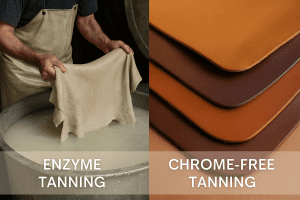
Enzyme tanning (left) and chrome-free tanning (right) side-by-side, illustrating the eco-friendly innovation in modern leather processing.
Artisan Insights
- Enzyme tanning works beautifully as a pre-step to vegetable tanning, resulting in leather that tools and molds more consistently.
- Chrome-free tanning is gaining traction in luxury brands because it supports sustainability certifications and avoids chemical concerns without losing performance.
- The “feel” of chrome-free leather can be slightly firmer, which can be adjusted in post-tanning processes like milling or fatliquoring.
Conclusion
The future of leathercraft is as much about innovation and sustainability as it is about tradition. Enzyme tanning and chrome-free tanning represent the next chapter in an industry that’s adapting to environmental demands while keeping the artisan spirit alive. Whether you’re a maker looking for safer materials or a buyer seeking eco-conscious products, understanding these methods helps you make informed choices.